How to Store Produce Longer Without Wasting Food

Updated: Aug 10

If you want to store produce longer, the answer is not to seal every fruit and vegetable inside matching containers. Fresh produce has different needs. Some items need cold, humid air. Some need airflow and a dry, dark cupboard. Some release ethylene gas that speeds ripening in nearby produce.
How we research recommendations: The products discussed here have not been personally tested by Amour Living unless clearly stated. We compared current product specifications, dimensions, materials, customer ratings and recurring feedback. Availability, ratings and product details can change, so recheck the listing and measure your cabinet before ordering.
Affiliate disclosure: This article may contain affiliate links. If you make a qualifying purchase through one of these links, Amour Living may earn a commission at no additional cost to you.
The practical system is to sort produce when it comes home, keep it dry unless a specific item needs added humidity, separate fast ripeners from sensitive vegetables, and place the most perishable food where you can see it. A purpose-built container can help with selected berries, greens, and vegetables, but only after those basics are right.
Short on time? Jump straight to the storage guidance for common produce ↓
Why fresh produce spoils so quickly
Produce continues to respire and change after harvest. Too much moisture can encourage decay; too little can cause wilting and shriveling. Warm temperatures speed deterioration, while some cold-sensitive foods lose flavor or texture in the refrigerator. Bruised or moldy pieces can also affect the rest of a package.
Ethylene adds another layer. Apples, bananas, ripe tomatoes, avocados, pears, peaches, and several other fruits release ethylene as they ripen. Sensitive vegetables such as leafy greens, broccoli, carrots, cucumbers, and herbs may yellow, soften, or deteriorate faster when stored close to strong producers. USDA guidance recommends keeping ethylene-producing items as far from sensitive produce as practical.
How to Store Produce Longer: The Five-Minute Reset
1. Remove damaged pieces
Check the bag or carton before storage. Use bruised but still sound produce first and discard anything rotten or extensively moldy. Do not leave a leaking berry or soft vegetable hidden underneath the rest.
2. Decide: counter, cupboard, or refrigerator
Do not treat the refrigerator as the universal answer. Potatoes and garlic prefer a cool, dry, dark, ventilated place. Whole tomatoes generally keep better flavor at room temperature until ripe, while cut tomatoes must be refrigerated. Bananas, avocados, pears, peaches, and some other fruit can ripen on the counter, then move to the refrigerator to slow further ripening.
3. Separate ethylene producers
Give apples and other strong ripeners their own area or bag rather than mixing them with leafy vegetables. Keep bananas away from produce you are not trying to ripen. Separation does not require a perfect laboratory setup; even using different drawers or shelves can help.
4. Control moisture instead of chasing airtightness
Leafy greens lose water and wilt, so they benefit from a humid environment with enough airflow to avoid trapped condensation. Berries and mushrooms are vulnerable to excess moisture. Store them dry and wash under running water shortly before use. FDA advises washing produce before preparing or eating and says not to use soap, detergent, or commercial produce wash.
5. Make the next item visible

Put a shallow “use first” tray or a clearly visible section at eye level. Move the soft avocado, open herb bunch, ripe peaches, and half-used vegetables there. This is not decorative organization—it turns food that would be forgotten into the next snack or meal ingredient.
Use your crisper drawers properly
A crisper drawer changes humidity by changing how much air can escape. If your drawer has a slider, “high humidity” usually closes the vent; “low humidity” opens it. Drawer labels vary, so check the appliance instructions.
High humidity: vegetables that wilt
Use the higher-humidity drawer for leafy greens, broccoli, carrots, celery, and similar vegetables that lose water and become limp. Keep the drawer clean and avoid compressing leaves under heavy produce.
Low humidity: produce that releases ethylene
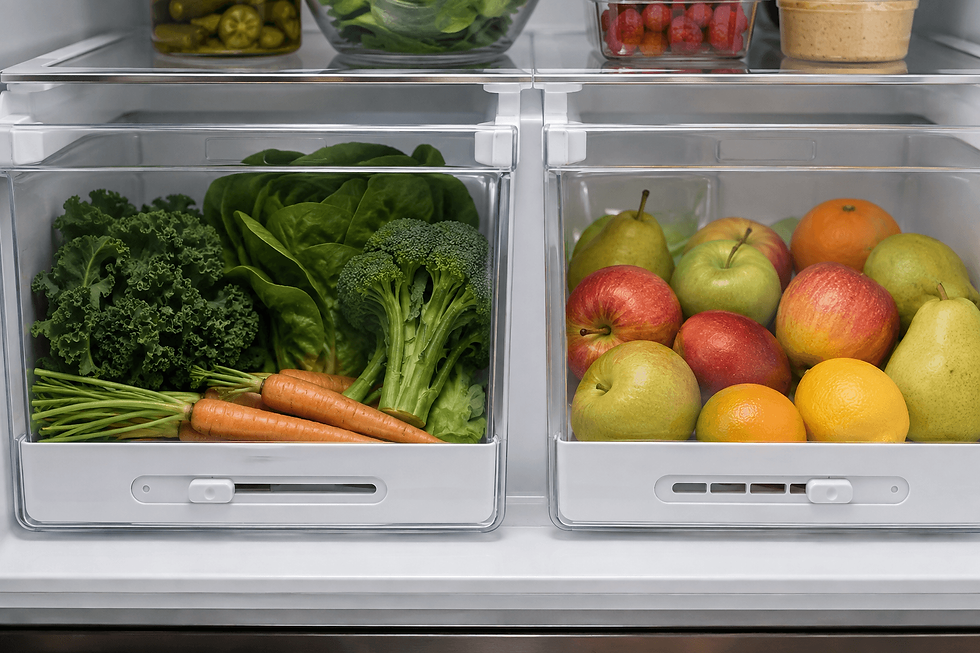
Use the lower-humidity or more open drawer for many fruits, especially ripe ethylene producers. The open vent gives the gas a way to escape. Do not overfill the drawer so tightly that air cannot circulate or older food disappears underneath.
Storage guidance for common produce

Leafy greens
Remove damaged leaves and keep greens cold. If they are already washed, dry them thoroughly before storage. A bag or container with a clean towel can absorb excess droplets while retaining useful humidity. Replace a soaked towel rather than leaving leaves against standing water.
Berries and grapes
Refrigerate them promptly, keep them dry, and remove crushed or moldy pieces. Wash only the amount you are about to eat unless your storage method specifically includes thorough drying. A shallow container protects delicate berries from being crushed.
Fresh herbs
Treat sturdy herbs and delicate herbs differently. Parsley and cilantro can often be stored like a small bouquet in water with a loose cover in the refrigerator. Basil is cold-sensitive and may do better at room temperature in water, away from direct sun. In every case, trim damaged stems and watch for condensation or decay.
Carrots and celery
Remove leafy tops from carrots because the leaves draw moisture from the root. Store carrots and celery cold in a high-humidity environment. A loose bag can reduce moisture loss without trapping visible water.
Potatoes, onions, and garlic
Store potatoes in a dark, cool, ventilated cupboard—not the refrigerator and not in direct light. Purdue Extension recommends a brown paper bag in a dark cupboard.
Keep onions and garlic dry with airflow. Do not pack potatoes and onions tightly together; moisture and ripening conditions that suit one can shorten the other’s useful life.
Tomatoes and avocados
Let firm tomatoes and avocados ripen at room temperature. Once ripe, refrigeration can buy time, although tomatoes may lose some texture and aroma. Refrigerate all cut produce promptly in a clean covered container.
When a produce container genuinely helps
A produce keeper is most useful when your refrigerator has weak crisper storage, delicate food sits in pooled moisture, loose bags become crushed, or you regularly buy enough berries and greens to fill a dedicated container. It is less useful when refrigerator space is already tight or produce is usually eaten within a day or two.
Best optional product: Rubbermaid FreshWorks Produce Saver

Based on current specifications and customer evidence, the Rubbermaid FreshWorks Produce Saver is the clearest general-purpose optional product for unwashed, uncut refrigerated produce. Its elevated base keeps food above collected moisture, while the built-in vent regulates airflow. Rubbermaid states that the BPA-free containers are dishwasher-safe and work best when only one type of unwashed, uncut produce is placed in each container.
The important drawback is space. The larger sizes are bulky, and buying a full set before measuring your refrigerator can create a new storage problem. Start with one size that fits a food you repeatedly lose—such as berries, greens, or cucumbers—rather than replacing every produce bag at once.
Who should avoid it
Skip it if your refrigerator is small, your crisper already works well, you buy only small amounts, or you prefer glass. It is also not a universal container for potatoes, onions, garlic, bananas, whole tomatoes, or every herb. No container can rescue already damaged produce or compensate for a warm refrigerator.
Cheaper alternative
Use the crisper drawer you already own, add one clean towel where condensation is a repeated problem, and keep food in a loose or perforated bag when it needs humidity plus some airflow. This costs little or nothing and should be tested before buying a container set.
Food-safety rules that freshness hacks should not override
Keep the refrigerator at 40°F (4°C) or below. FDA specifically identifies items such as strawberries, lettuce, herbs, and mushrooms as perishable produce that belongs in a clean refrigerator. Keep produce separate from raw meat, poultry, and seafood, and clean refrigerator spills promptly.
Rinse produce under running water before preparing or eating it. Do not use soap or detergent. Scrub firm produce with a clean produce brush, and cut away damaged areas before preparation. Refrigerate cut, peeled, or cooked produce promptly. When an item smells wrong, is slimy, extensively moldy, or has been stored unsafely, freshness tricks are not a reason to eat it.
Common storage mistakes

Washing everything and putting it away wet
Residual water becomes trapped around berries, mushrooms, and leafy produce. If you wash ahead, dry completely and use a storage method designed for the item.
Sealing every item airtight
Some produce needs moisture retention, but some also needs airflow. Condensation inside a sealed box is a warning that the environment needs adjusting.
Mixing all produce in one drawer
Strong ethylene producers can shorten the quality of sensitive vegetables, and one overripe item is easily hidden.
Buying a complete container set first
Containers do not solve wrong temperature, poor visibility, or incompatible produce. Measure your shelf and solve one repeated loss before expanding.
Forgetting the refrigerator temperature
A beautiful storage system cannot protect perishable produce in a refrigerator running too warm.
The Amour Living produce routine
After shopping, spend five minutes sorting—not decanting. Move damaged pieces to “use first,” separate strong ripeners, place cold-sensitive items in the right counter or cupboard zone, and put perishable produce into the refrigerator. Twice a week, scan the use-first zone before planning dinner or buying more.
This simple routine helps store produce longer because it fixes the real causes of waste: wrong location, trapped moisture, ethylene exposure, and invisibility. Buy a produce keeper only when you can name the specific food and failure it will solve.
For dry goods and packaged ingredients, our guide to organizing a small pantry without wasting space shows how to improve visibility without buying matching containers for everything. If produce tools are buried in awkward cabinetry, see our guide to organizing deep kitchen drawers without wasting space.
Frequently Asked Questions
Should I wash produce before storing it?
Usually, store produce dry and wash it under running water before preparing or eating. If you wash ahead, dry it thoroughly. Follow item-specific guidance and never use soap or detergent.
Which produce should be kept away from bananas?
Keep bananas away from ethylene-sensitive items such as leafy greens, broccoli, cucumbers, carrots, and many herbs unless you are intentionally trying to speed ripening.
What does the crisper drawer slider do?
It controls airflow and therefore humidity. A closed vent retains humidity for vegetables that wilt; an open vent releases moisture and ethylene for many fruits. Check your refrigerator manual because labels vary.
Are produce saver containers worth it?
They can be worthwhile for a specific recurring loss, especially delicate refrigerated produce affected by pooled moisture or crushing. They are unnecessary when the crisper and simple bags already work.
How cold should my refrigerator be?
Keep it at 40°F (4°C) or below. A refrigerator thermometer can confirm the actual temperature.
Can moldy berries be removed while the rest are eaten?
Discard moldy berries and inspect nearby fruit carefully. Soft, high-moisture foods can be affected beyond what is visible; when in doubt, discard the package rather than trying to salvage questionable food.


Comments